Apple iPhone 18 Series: 10 Biggest Changes

There is always something new in Apple’s iPhone lineup every year. And there was no shortfall with the arrival of the iPhone 18 Series in 2026. This year, Apple brought some major upgrades to its new line of iPhones. From variable camera apertures to battery life, the changes extend beyond simple spec bumps.
The iPhone 18 Pro and iPhone 18 Pro Max stand out with more advanced cameras, stronger performance, and refined displays. In particular, the Pro Max takes Apple’s flagship experience even further for photography, gaming, and everyday use.
Interestingly, Apple has also announced its first-ever foldable ambitions, more interesting with the special iPhone Duo. This brings an innovative form factor to the iPhone family. So, what really has changed this year? Let’s explore the 10 biggest iPhone 18 Series upgrades and see which ones matter to you.
10 Biggest Changes Coming to the iPhone 18 Series
The iPhone 18 Series brings upgrades beyond a faster processor or improved camera sensor. This generation focuses heavily on how the phone looks, feels, shoots, and handles AI. Here are the 10 biggest changes and what they mean for you.
1. New Unified Color Palette
Apple has taken a more seamless approach to the iPhone 18 Series design. The revamped unified color palette reduces the strong two-tone contrast between the glass back and metal frame. As a result, the phone has a cleaner, more consistent look from every angle.
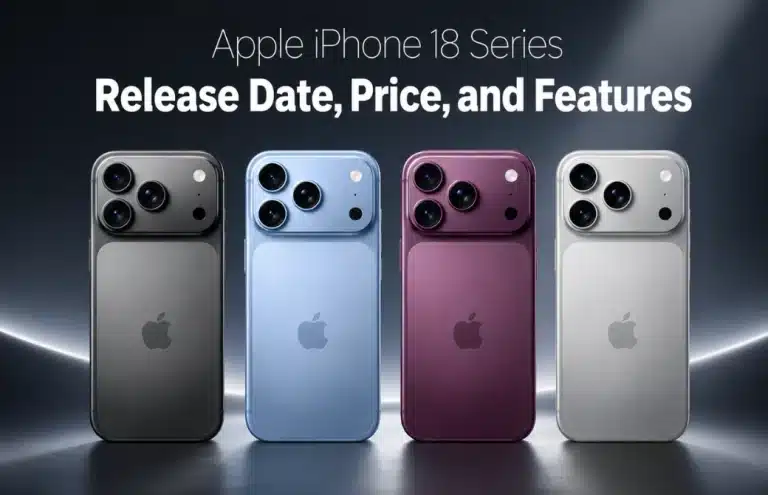
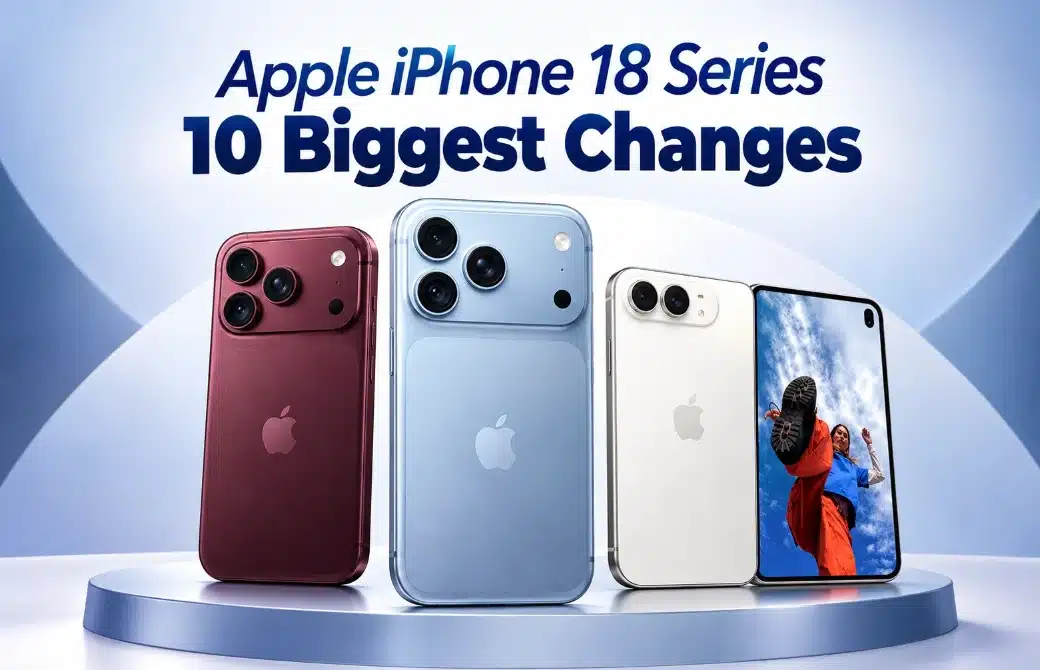
The lineup comes in four eye-catchy finishes: Black, Silver, Glacier, and Burgundy. Glacier adds a soft light-blue touch, while stunning Burgundy gives the Pro models a more distinctive appearance.
The build also got a major durability boost. The iPhone 18 Series features an aluminum unibody and Ceramic Shield 2 front glass. The new glass offers up to three times the scratch resistance of the previous generation.
What does this mean for you:
- A more seamless and refined appearance.
- Better resistance to everyday scratches.
- Lightweight yet strong aluminum construction.
- More color choices for different styles.
Surprisingly, this is not just a cosmetic change. Better scratch resistance can keep the display looking newer for longer.
2. A20 Pro 2nm Chip
The A20 Pro is one of the biggest performance upgrades in the iPhone 18 Series. Apple moved to an advanced 2nm manufacturing process. This allows the chip to deliver more power while using energy more efficiently.
Apple claims the A20 Pro offers up to 20% faster CPU and 40% faster GPU performance. That gives demanding users more headroom for heavy tasks. The chip also introduces a dual 16-core Neural Engine, which boosts on-device AI processing.
Key benefits include:
- Up to 20% faster CPU
- Up to 40% GPU performance.
- Faster app loading and multitasking.
- Better gaming performance.
- Faster video and photo processing.
- More capable of on-device AI.
- Better efficiency for daily use.
For normal users, the difference may appear as smoother performance. For gamers and creators, the jump could be more noticeable.
3. Dual 16-Core Neural Engine
AI is another major focus of the iPhone 18 Series. The A20 Pro’s dual 16-core neural engine provides 32 total cores. This effectively doubles the on-device AI processing capability over the previous setup. This matters because more AI tasks can run directly on the iPhone rather than rely heavily on cloud processing.
Potential user benefits include:
- Faster on-device AI processing.
- Faster large-language model processing.
- Quicker AI-powered features.
- Better image and video processing.
- More responsive and intelligent features.
The biggest advantage is speed. AI tasks respond faster when hardware processes more information locally. It can also benefit privacy-focused users because more processing can happen directly on the device.
4. Variable Aperture Main Camera
This could be the most exciting camera change in the iPhone 18 Series. The 48MP Fusion main camera now features a mechanically variable aperture from f/1.48 to f/4.0.
Instead of relying on one fixed aperture, the camera can physically adjust how much light enters the lens. Six laser-cut blades control the openings. This also gives the camera more control over the depth of field. You can use the aperture manually or let the iPhone adjust it automatically.
Why it matters:
- Wider apertures can bring more light for night shots.
- Narrower apertures provide greater depth of field.
- Portraits can get more natural background separation.
- Manual control gives photographers more creative freedom.
- Automatic adjustment makes shooting easier for everyone.
The benefit stretches beyond the aperture itself. Better image processing, smarter HDR, improved Night photography, stronger video recording, and computational photography can work together to produce more consistent results.
Photography enthusiasts will appreciate this upgrade. It brings the iPhone closer to dedicated cameras while keeping point-and-shoot simple.
5. Advanced Pro Camera Controls & Video
Apple gives Pro users more control over the camera with its native Pro Camera Controls. The redesigned built-in camera app adds professional tools such as live histograms and aperture controls.
A histogram shows how light and shadow are distributed in an image. This makes it easier to avoid overexposing highlighted or dark areas. The video system also got some interesting additions to its on-device AI that lock into moving subjects.
New camera and video features include:
- Live histogram.
- Manual aperture control.
- 4K Dolby Vision time-lapses.
- Post-capture cinematic effects.
- Reference Image cryptographic signing.
The last feature is particularly interesting. Reference Image cryptographic signing can verify photo authenticity. That could become useful when users need to prove that an image is genuine and has not been altered. For casual users, these controls can stay out of the way. For photographers, creators, and professionals, they offer much more control over the final result.
6. Advanced Display & Shrinking Dynamic Island
The iPhone 18 Series also makes the phone’s front more immersive. Pro models continue to use ProMotion and LTPO OLED technology, delivering smooth scrolling while helping manage power consumption.
But the more noticeable change could be the Dynamic Island. Its size is reduced by nearly 25%. Meanwhile, some Face ID components are partially hidden beneath the display.
That means more usable screen space without completely removing Apple’s familiar interactive area.
Display improvements include:
- ProMotion technology.
- LTPO OLED upgrades.
- Nearly 25% smaller Dynamic Island.
- Partially under-display Face ID components.
- Up to three simultaneous live activities.
The smaller Dynamic Island should feel less distracting during video playback, gaming, and other full-screen activities. Meanwhile, supporting three live activities at once can make the feature more useful for tracking things.
7. Vapor Chamber Thermal Cooling
Heavy gaming and video editing can quickly raise smartphone temperatures. The iPhone 18 Pro models address this with the latest vapor chamber cooling system. The new vapor chamber has three times the previous generation’s surface area. This gives the phone more room to spread and move heat away from high-load components.
The practical benefits are clear:
- Better heat dissipation.
- More stable performance during long gaming sessions.
- Heat causes a performance drop.
- Better sustained video editing performance.
- More comfortable operation during demanding workloads.
This is one of those upgrades you may not notice immediately. But during a long gaming session, the difference can become important. Instead of focusing only on peak performance, Apple is placing greater emphasis on sustained performance.
8. Significantly Improved Battery Life
A faster chip does not mean much if the battery runs out quickly. Apple appears to have addressed both sides of that equation with the iPhone 18 Series. The iPhone 18 Pro Max can support up to 45 hours of video playback, according to specifications.
The A20 Pro’s efficiency gains also reduce its daily power consumption. That combination can make a major difference for long hours away from a charger.
Battery benefits include:
- Up to 45 hours of video playback on Pro Max.
- Lower daily power draw from the A20 Pro.
- Longer use between charges.
- Better endurance for gaming and streaming.
- More confidence during travel and on-the-go use.
For heavy users, better battery life can be more valuable than a small performance increase. You can spend more time using the phone and less time searching for a charger.
9. Next-Generation C2 Cellular Modem
Apple continues its move toward more in-house connectivity hardware with the C2 cellular modem. It improves cellular reliability while offering 50% faster upload speeds. The modem also consumes 15% less energy and adds mmWave support in the U.S.
For users, fast uploads can be particularly useful when sending large videos, backing up files, posting content, or using cloud services over mobile data.
C2 modem benefits:
- Improved cellular reliability.
- Up to 50% faster upload speeds.
- 15% lower energy consumption.
- mmWave support in the U.S.
- Better efficiency during mobile data use.
The biggest everyday advantage may be the combination of better connectivity and lower power use. You get faster data transfers without putting as much pressure on the battery.
10. N1 Wireless Networking Chip
The iPhone 18 Series also introduces the N1 wireless networking chip. This new chip brings several wireless technologies together on one Apple-designed chip.
It integrates:
- Wi-Fi 7
- Bluetooth 6
- Thread connectivity
This makes the iPhone a strong hub for modern wireless devices. Threads are also significant for smart-home users. It gives the iPhone better support for connected home devices that use the Thread ecosystem.
Honorable Mention: Apple iPhone Duo
The iPhone Duo deserves its own spotlight because it represents a complete revolution in Apple’s smartphone lineup. Rather than another traditional iPhone, it brings a foldable form factor to the family.
The phone uses a Grade 5 titanium frame and hinge cover for a strong folding structure. It features a 5.4-inch external OLED display for quick tasks and a larger 7.6-inch Super Retina XDR inner display when you need more space.
Apple also replaced Face ID with Touch ID integration, while a dual-battery system aims to provide all-day power.
Key iPhone Duo features include:
- Grade 5 titanium frame and hinge cover.
- 5.4-inch external OLED display.
- 7.6-inch Super Retina XDR inner display.
- Integrated Touch ID.
- Dual-battery system.
- Apple Pencil support on the folding inner display.
The Apple Pencil support could be the surprise. The larger inner screen gives users more room for notes, sketches, documents, and creative work. For people who want a single device for both phone and iPad tasks, the iPhone Duo could open an entirely new chapter for Apple.
Which iPhone 18 Model Should You Buy?
The iPhone 18 lineup is no longer just a rumor. Apple has officially launched the iPhone 18 Pro and the iPhone 18 Pro Max. However, the upgraded iPhone Duo brings a completely different foldable experience. The right choice depends less on price and more on how you use your phone.
iPhone 18 Pro: Best for Most Pro Users
The iPhone 18 Pro is the best choice if you want flagship performance without the Pro Max size. It comes with a 6.3-inch Super Retina XDR OLED display and similar specs.
It is particularly suitable for:
- Users who want a compact, powerful iPhone.
- Photography enthusiasts who want manual aperture control.
- Gamers who need sustained performance.
- Users who want the latest AI and camera features.
- People who do not need the largest screen.
Choose the iPhone 18 Pro if: You want the right balance between size, camera capability, performance, and everyday usability.
iPhone 18 Pro Max: Best for Battery & Display
The iPhone 18 Pro Max is the best choice for users who want a bigger and longer-lasting iPhone. It shares the Pro’s core camera and A20 Pro features but adds a larger display and the longest battery life.
Apple claims up to 45 hours of video playback on the eSIM-only Pro Max. It also benefits from the larger battery enabled by the removal of the physical SIM slot on those models.
It is particularly suitable for:
- Heavy gamers.
- Video editors and content creators.
- Frequent travellers are them.
- Users watch lots of movies and videos.
- People who want maximum battery life.
- Anyone who prefers large-screen phones.
Choose the iPhone 18 Pro Max if: You want battery life and a large display to matter more to you than a smaller, more convenient form factor.
Will iPhone 18 Series Be a Worthwhile Upgrade From iPhone 17 Series?
The iPhone 18 Series is a worthwhile upgrade from the new or refurbished iPhone 17 Series. This is true for users who want meaningful camera upgrades, improved performance, and battery improvements. The A20 Pro chip boosts performance. Meanwhile, the variable-aperture 48MP Fusion camera gives photography enthusiasts more control over light and depth.
Moreover, the
- Small dynamic island
- Improved thermal cooling, and
- Stronger battery endurance
Enhance the daily experience. Particularly, the iPhone 18 Pro Max stands out for heavy users who want longer battery life and a larger display. Despite these upgrades, iPhone 17 series users who are happy with their devices may not need to rush.
The difference is more noticeable for photographers, gamers, creators, and power users. Surprisingly, the biggest reason to upgrade could also be Apple’s iPhone Duo. Especially if you want to move from a traditional iPhone to a foldable experience.