
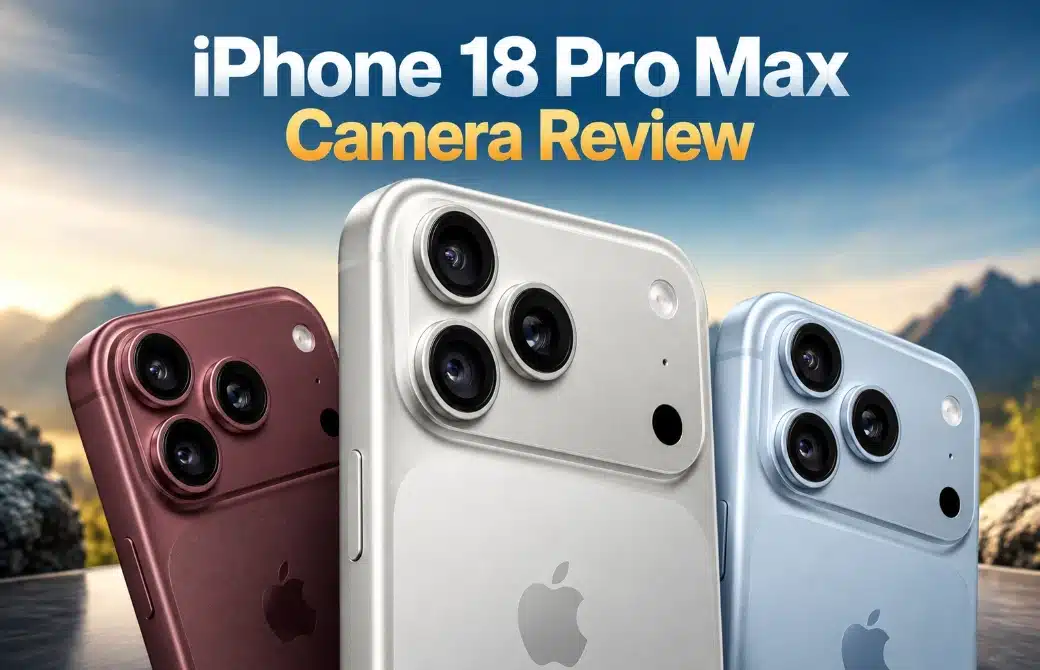
iPhone 18 Pro Max Camera Review

The iPhone 18 Pro and 18 Pro Max cameras bring changes that extend far beyond the megapixel race. For the first time, its main camera uses a physical six-blade variable aperture, with four settings from f/1.48 to f/4.0. That changes how you control light, depth, and even the look of bright lights in your photos.
Surprisingly, Apple also added native controls for shutter speed, white balance, focus, and aperture, along with a live exposure histogram. The 48MP main, ultrawide, and 4x telephoto cameras further strengthen the setup.
But does all this make the iPhone 18 Pro Max a true photographic beast? Or are some upgrades more useful on paper than in everyday shooting? In this iPhone 18 Pro Max Camera Review, we test what these changes actually mean for portraits, low-light shots, selfies, and video. We’ll also look at what Apple has still missed.
Biggest Camera Upgrade on iPhone 18 Pro Max: Variable Aperture
The biggest camera upgrade on the iPhone 18 Pro Max is its physical variable aperture. A six-blade mechanical iris lets you switch between f/1.48, f/1.8, f/2.8, and f/4.0. This gives you better control over light, depth of field, and bright highlights. Notably, it can create natural background blurs and starburst effects without software.
iPhone 18 Pro Max Main Camera Review
Three 48MP rear cameras give the iPhone 18 series a consistent camera setup. But the real twist sits in the main camera. Apple combines a large Sony sensor, physical variable aperture, and enhanced manual controls.
Main Camera Review
The 48MP Sony IMX 905 is the primary camera. It uses a large 1/1.28-inch sensor with pixel sizes ranging from 1.22µm to 2.44µm. This gives the main camera strong detail and useful light-gathering ability.
The standout feature is the six-blade mechanical iris. You can switch between f/1.48, f/1.8, f/2.8, and f/4.0. The f/1.48 setting is notably wider than the iPhone 17 Pro’s fixed f/1.78 aperture. It can bring more light into darker scenes while also creating a shallower depth of field.
The variable aperture also adds a more natural optical look. Bright light sources can produce starburst effects. Meanwhile, wider settings can separate subjects from the background. However, don’t expect every picture to look dramatically different. The aperture becomes most useful when you deliberately control how the camera handles light and depth.
Aside from the aperture change, the main camera focuses on 17.5cm. That is useful for food, flowers, products, and other nearby subjects. It captures detail with well-defined textures.
Also, the 2x zoom mode produces detailed portraits with effective subject separation. Skin tones retain warmth, while highlights look controlled. Much of this look comes from Apple’s image processing rather than aperture alone.
Telephoto Camera Review
The telephoto camera uses another 48MP Sony sensor, the IMX 973. It measures 1/2.55-inch and offers pixel sizes from 0.7µm to 1.4µm. Its biggest advantage is its 4x optical zoom. The lens provides a 100mm-equivalent focal length, giving the iPhone 18 Pro Max useful reach without digital cropping.
Moreover, a 100mm focal length is particularly useful for tightly framed portraits. You can fill the frame while standing farther away from your subject. It also produces a flatter perspective than shooting close with a wide lens. The 4x optical camera is most useful when you need long distance without sacrificing detail. Portraits retain texture, while distant subjects are easier to frame.
Ultrawide Camera Review
The ultrawide camera uses a 48MP Sony IMX 972 with a 1/2.55-inch sensor and 0.7µm–1.4µm pixel range. It’s roughly a 13mm-equivalent field of view like Google Pixels and Samsung Galaxies. This captures much more of the scene than the main camera does. It works particularly well for landscapes, buildings, group shots, and travel photos. The 48MP resolution also delivers plenty of detail when the lighting is favorable.
The main camera remains the better choice when you want stronger subject detail, more natural framing, or better low-light flexibility. Its larger sensor and variable aperture give you more control over exposure and depth of field.
iPhone 18 Pro Max Selfie Camera Review
The iPhone 18 Pro Max brings an 18MP Sony IMX 914 sensor to the front. This gives selfies a strong balance of detail and natural framing.
18MP Sony IMX 914 Front Camera
The 18MP Sony IMX 914 front camera delivers plenty of resolution for selfies, video calls, and social media content. Its pixel size is expected to be around 1.0µm. The higher resolution also gives you more room to crop without losing as much detail.
20mm vs 30mm Equivalent Selfie Framing
At its native 20mm-equivalent focal length, the front camera captures a wider view. It works well for group selfies, landmarks, and on-the-go travel shots. The default 30mm-equivalent mode gives a tighter composition. It keeps more attention on your face and reduces unnecessary background space.
iPhone 18 Pro Max Video Camera Review
The iPhone 18 Pro Max pushes its camera system beyond photography with serious video tools. Notably, all four cameras can record 4K video. The audio side also gets attention with spatial audio and multi-channel recording.
- 4K Video on Every Camera: The main, telephoto, ultrawide, and front cameras can record at up to 4K at 60 fps, with 30 fps and 24 fps options. This makes switching between cameras more flexible while recording.
- Dolby Vision Video: Dolby Vision recording works across the camera modes. It preserves a wider range of brightness and color, making compatible footage look more detailed in highlights and shadows.
- ProRes and Apple Log 2: ProRes gives creators more flexibility during editing. Meanwhile, Apple Log 2 provides greater room for color grading. These tools are particularly useful for professional video workflows.
- External Storage Recording: The iPhone 18 Pro and Pro Max can record to external storage for some higher-frame-rate modes. This is useful because high-quality video files can quickly consume internal storage.
- HEVC/H.265 Recording: HEVC/H.265 offers a more storage-friendly way to record high-quality video. It keeps file sizes more manageable without giving up the benefits of modern 4K recording.
- Spatial Audio & Stereo AAC Track: The iPhone can record Spatial Audio and store a stereo AAC track for wider compatibility. It can also capture four-channel AAC audio, giving creators more flexibility when working with recorded sound.
All-New Focus Tracking: Better for Moving Subjects
A moving subject can change the entire shot in a fraction of a second. The iPhone 18 Pro Max tackles this with a new focus and tracking system. This can lock onto unpredictable subjects and follow them as they move.
Locks Onto Unpredictable Subjects
The enhanced focus-tracking system continuously follows your selected subject rather than treating focus as a one-time action. This is particularly useful when the subject suddenly changes direction or moves closer to the camera.
For example, a child may run across the frame, a pet may jump, or a vehicle may pass through the scene. The camera can track the subject and reduce the chance of the background stealing the focus.
Works for both Photo and Video
One major advantage is that focus tracking works in both photo and video. That makes it useful beyond simple snapshots.
In photography, it keeps moving subjects sharp as they cross the frame. In a video, it can track the subject as the surrounding scene changes. This is especially useful when recording unpredictable action, where manual focus would take too long.
Notably, the system becomes more valuable when shooting in the field. You can start recording and let the focus system handle changes in subject position while you compose.
Useful for Children, Pets, Sports, and Moving Vehicles
Focus tracking has clear benefits for everyday subjects that rarely stay still. Children can suddenly run, jump, or move toward the camera. Pets can change direction without warning. Sports involve faster movements.
It can also help when photographing or recording moving vehicles. Instead of letting the background grab attention, the camera can keep the moving subject as its focus. For sports and action photography, this can make a noticeable difference, as you often get only one chance to capture the right moment.
Reduces Background Distractions
Busy backgrounds confuse autofocus. People, buildings, lights, and other objects may compete with the main subject. The enhanced tracking system aims to keep attention on the selected subject as it moves. This is particularly helpful in crowded places.
Imagine recording a child running through a park or a person moving on a busy street. The background changes, but the subject remains the main focus.
Combined with the iPhone 18 Pro Max’s other camera controls, focus tracking gives users more control over difficult shots. You can focus on capturing the moment while the camera works to keep the moving subject locked.
iPhone 18 Pro Max Camera Control: What’s Missing?
The iPhone 18 Pro Max gives photographers more manual control than ever. There was, however, one more physical control that could have been implemented.
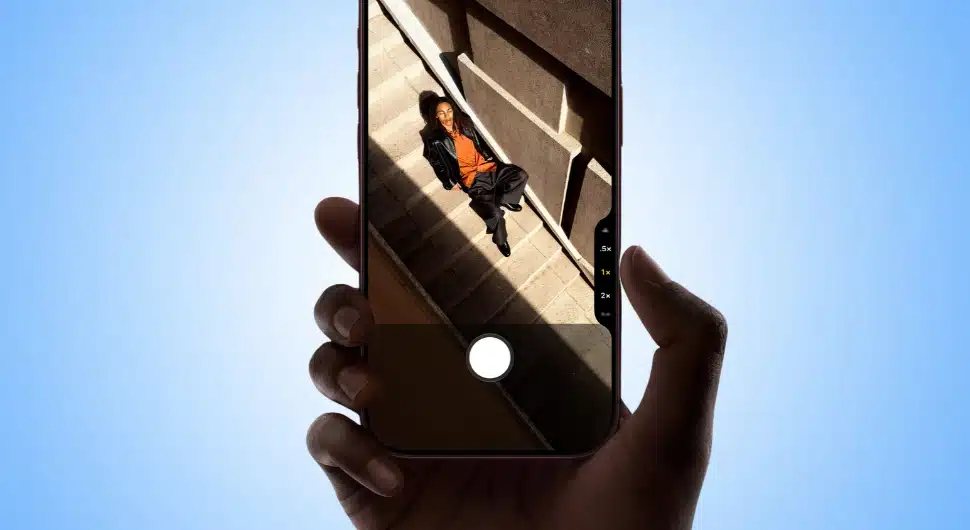
Camera Control Still Has Limitations
The biggest missed opportunity is shutter speed control. The iPhone 18 Pro Max introduces native Pro Controls for manual shutter speed, white balance, aperture, focus, and live exposure monitoring.
Yet the physical Camera Control button cannot directly adjust the shutter speed. This means you still need to use the on-screen controls when changing the shutter speed manually. It takes a lot more steps than a dedicated physical control to achieve this.
Especially useful for Manual Photographers
For casual users, this limitation may not matter much. The automatic camera system handles most everyday shots without manual adjustments.
However, photographers who regularly use Pro Controls may notice it more. Shutter speed, aperture, focus, and exposure can all affect an image’s final look. Having to reach for the screen instead of using a physical control adds an extra step.
iPhone 18 Pro Max Camera Review: Final Verdict
The iPhone 18 Pro Max camera is more than a routine yearly upgrade. Its biggest change is not simply another sensor or megapixel increase. The physical variable aperture gives the main camera real control over light and depth. Meanwhile, native Pro Controls bring manual photography closer to dedicated cameras.
Also, the three 48MP rear cameras create a versatile setup. The 4x telephoto is particularly useful for portraits and distant subjects. However, the ultrawide offers flexibility for landscapes and group shots. The new focus-tracking system makes it easier to capture moving subjects.
Overall, the iPhone 18 Pro Max camera stands out for giving photographers more control over the look of their photos. For everyday users, much of the experience remains automatic. But for enthusiasts and creatives who want to control light, focus, depth, and motion, the new camera system offers a much more flexible tool for photography.


